

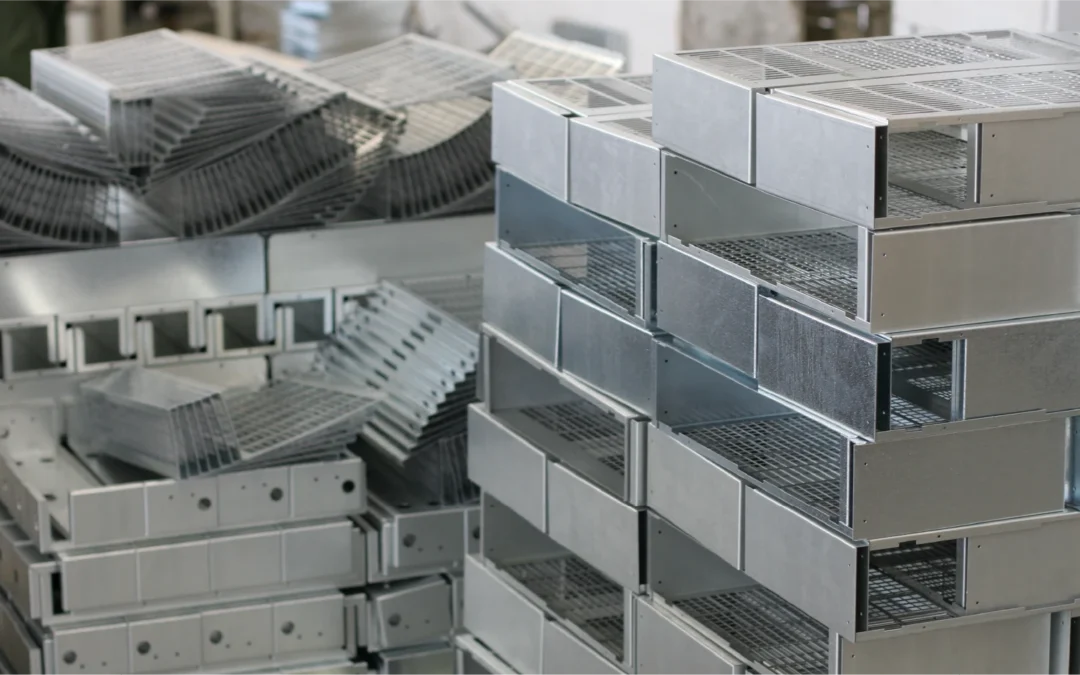
When it comes to custom sheet metal enclosures, a clean CAD design does not always result in a finished product that’s on time and on budget. For most projects, the difference between success and failure is determined by decisions made long before a product even reaches the assembly line. If your design isn’t created with the manufacturing process in mind, you can run into problems at the press brake, at the welder, or during assembly. The problem is that, by that point, the cost of fixing those problems has multiplied. Tweaking a flange dimension on a drawing is free; reworking a hundred bent panels is not.
Design for Manufacturability (DFM) closes that gap. It is the review work that happens before tooling starts, where every feature gets evaluated against how the part will actually be cut, formed, finished, and assembled. Done well, it pulls the cost of the project down and shortens lead times.
At Highland Machine, our enclosure design services and DFM review are built into the custom sheet metal enclosures we manufacture every day. This article covers why design for manufacturability matters and how to set your project up so your prototype carries cleanly into production.
What DFM means for custom enclosures
Design for Manufacturability is the practice of designing a part so it can be built reliably and economically once it reaches the full production stage. For enclosure fabrication, that means evaluating the desired materials plus every bend, hole, weld, fastener, and finish against the realities of laser cutting, CNC punching, press brake forming, welding, powder coating, and assembly.
Without an effective DFM process, your product can end up with a bend radius your press brake cannot produce, a hole position that distorts during forming, or a material that isn’t compatible with your finishing technique. If they are not caught in the design stage, these types of problems will show up on the shop floor and be very expensive to fix.
Common issues that can drive up enclosure fabrication costs
Most cost overruns trace back to a small number of recurring design problems. Catching them early is usually the difference between a project that hits its target cost and one that quietly bleeds margin through every revision. Here are examples of several common design issues:
Bend radius
The inside bend radius should be at least equal to the material thickness, and larger for harder alloys or thicker stock. Specifying a tighter radius than the material can take leads to cracking on the outside of the bend.
Hole placement near bends
Holes placed too close to a bend line distort during forming, ending up oval rather than round. The standard guideline is to keep hole edges at least 2x the material thickness away from the bend line, or farther for harder materials.
Flange length
Press brake tooling needs a minimum amount of material to grip during forming. Flanges below roughly 3x the material thickness cannot be reliably bent and require either custom tooling or a redesign.
Bend reliefs
Where a bend terminates near an edge, the material wants to tear. A small relief cut can give the metal somewhere to move. Missing reliefs are one of the most common reasons enclosures come off the brake with a hairline crack at the corner.
Hardware selection
PEM nuts, standoffs, captive screws, hinges, and latches all have their own design rules for minimum distance to edges and bends. Choosing the wrong fastener for the material thickness, or placing it too close to a feature it cannot clear, forces a redesign or a workaround at assembly.
Why design for manufacturability matters more for enclosures than for simpler parts
A bracket has a handful of features. A custom sheet metal enclosure has dozens, and they interact with one another. An undersized relief at one corner is annoying; the same issue at every corner of every panel in a six piece enclosure becomes a production problem.
Custom sheet metal enclosures also tend to have higher build volume than one off parts, which means design choices made early get multiplied across thousands of units. A 2% improvement in material utilization on a single bracket is rounding error. The same improvement across a five year production run is a significant amount of money saved. And because enclosures usually integrate with electrical panels, mounting hardware, and customer supplied parts, getting everything right at the design stage prevents fit issues from cascading through downstream assembly.
DFM, prototyping, and production should be handled by the same shop
DFM works best when the shop that reviews the design also builds the prototype and produces the final parts. When enclosure fabrication is split across vendors, the engineering work tends to be repeated, and knowledge of which bend was tricky or which finish worked well on which alloy gets lost in the handoff.
Highland Machine handles engineering, prototyping, fabrication, finishing, and assembly in the same facility. A DFM-reviewed design moves from drawing to working prototype to full production run on the same equipment, with the same team applying the same process knowledge at every stage.
What to look for in an enclosure design services partner
- In-house engineering with practical fabrication experience. The best DFM feedback comes from people who have run the equipment, not just modeled the part.
- Same shop prototyping and production. The engineering work compounds instead of being redone.
- A written DFM report. Verbal feedback gets forgotten. A written report is what actually changes the drawings.
- ISO 9001:2015 certification. Documented processes and traceability matter, particularly for regulated industries.
At Highland Machine, we check all the boxes. Our enclosure design services cover everything from initial drawing review through prototyping, full enclosure fabrication, finishing, and assembly. We are ISO 9001:2015 certified by TÜV Rheinland of North America, and because every step happens in the same facility, a DFM-reviewed design moves directly into prototype and production without losing the engineering work.
Frequently asked questions about DFM for custom enclosures
What is Design for Manufacturability?
DFM is the process of evaluating a design against the manufacturing methods that will produce it, identifying changes that improve manufacturability, reduce cost, and prevent production issues.
When should a DFM review happen?
The earlier the better. A review at the initial drawing stage costs nothing and can save significant rework. A review just before tooling release still catches major issues but leaves less room for design changes.
Does DFM mean redesigning my custom sheet metal enclosure from scratch?
No. Most DFM feedback involves small, targeted adjustments such as increasing a bend radius, moving a hole, or opening a tolerance. The goal is to keep your design intent while making it easier and cheaper to build.
Can DFM reduce the cost of a low volume enclosure fabrication run?
Yes. The percentage savings are often larger on low volume runs because fixed costs get spread across fewer parts.
What information do you need to perform a DFM review?
CAD files (STEP or native format), engineering drawings, intended material and finish, target production volume, and any application requirements such as environmental conditions or certifications. Sketches and concepts work too if formal drawings are not finished yet.
Want feedback on your enclosure design before you commit to tooling? Request a quote with your drawings, or contact our team to talk through your project.