

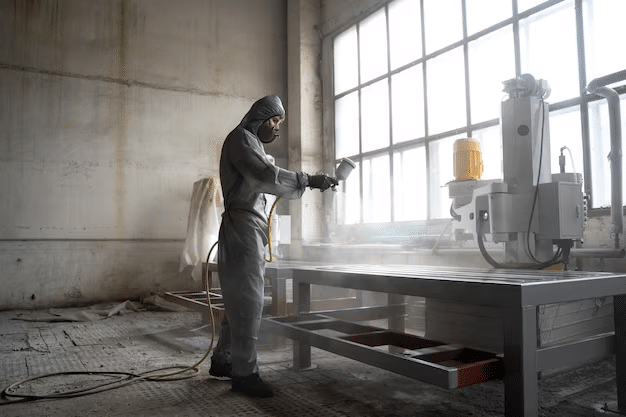
Sheet metal products are widely used in manufacturing, construction, transportation, and industrial equipment. Their performance depends not only on material selection and fabrication accuracy, but also on how effectively they are protected. Powder coating has become a preferred finishing method for sheet metal, because it maximizes durability, surface consistency, and resistance to environmental exposure without compromising design integrity.
In this article, we explain how powder coating works, why it is suitable for sheet metal products, and how custom powder coating services contribute to long term performance. It also explores the functional, environmental, and practical considerations that manufacturers evaluate when choosing this finishing process.
What Is Powder Coating and How Does It Work
Powder coating is a dry surface finishing method that applies electrically charged resin and pigment particles to metal components. The coated surface is then heat cured, allowing the powder to melt and form a strong, uniform layer.
- Powder application using electrostatic charge ensures even coverage on flat surfaces, edges, and complex shapes.
- Heat curing bonds the coating to the metal, improving resistance to wear, corrosion, and surface damage.
- Uniform layer thickness supports consistent performance and dimensional stability.
- Solvent free application reduces surface defects commonly found in liquid coatings.
Materials Used in Powder Coating
Powder coatings are typically formulated using thermoset or thermoplastic polymers. Thermoset coatings form permanent chemical bonds during curing, offering strong resistance to heat, chemicals, and mechanical stress. Thermoplastic coatings remain flexible when reheated and the application process is reversible, making it possible to repair or remove damaged coatings. Additives and pigments are selected based on color stability, surface texture, and performance requirements.
Why Powder Coating Is Effective for Sheet Metal Products
Sheet metal components are often exposed to moisture, friction, temperature variation, and mechanical impact. A protective surface finish plays a critical role in maintaining performance and extending service life.
- It creates a durable protective layer that shields sheet metal from corrosion, moisture, and environmental exposure.
- Powder coating provides consistent coating thickness, helping maintain dimensional accuracy and surface integrity.
- Having this layer of protection increases resistance to scratching, chipping, and abrasion in industrial and high use
- It also offers uniform coverage on edges and complex shapes where liquid coatings may fail.
- Powder coating supports long lifespans with minimal surface degradation over time.
Durability and Performance Benefits
One of the most significant advantages of powder coating is its durability. The cured surface is highly resistant to chipping, scratching, and abrasion compared to many conventional finishes.
Corrosion Resistance
Powder coated sheet metal can withstand humidity, chemicals, and temperature changes. Proper surface preparation prevents rust and slows wear and tear, making it ideal for enclosures, panels, frames, and brackets.
Mechanical Stability Over Time
The coating maintains its protective properties under repeated use and mechanical stress. This stability is important for components that must operate within tight tolerances or remain structurally sound over long production cycles.
Visual Consistency and Surface Quality
In addition to protection, powder coating improves the visual consistency of sheet metal products. This advantage is particularly important for parts that are visible in finished equipment or architectural applications.
Uniform Coverage
Electrostatic application ensures that powder particles are evenly distributed across the surface, reducing issues like runs, drips, or uneven texture that can occur with liquid coatings. Uniform coverage also increases edge protection, which is often a weak point in other finishing methods.
Finish Options and Textures
Powder coating offers a wide range of colors and surface textures. Matte, satin, and textured finishes can be selected to meet functional needs such as glare reduction or better grip. These options help designers achieve specific visual outcomes while maintaining performance.
Environmental and Operational Considerations
Sustainability and workplace safety are increasingly important in manufacturing operations. Powder coating offers several advantages in these areas.
Reduced Emissions and Waste
Because powder coatings contain little to no volatile organic compounds, levels of harmful emissions during application and curing are significantly lower than with many other finishing methods. Overspray can often be recovered and reused, reducing material waste and improving process efficiency.
Workplace Safety Benefits
The absence of solvents contributes to a safer working environment. Powder coating minimizes exposure risks for operators and simplifies compliance with environmental and occupational regulations.
Understanding Custom Coating Requirements
Every application has unique performance demands. Factors such as material type, operating environment, and expected lifespan influence coating selection. Custom powder coating enables manufacturers to specify thickness, texture, and protective properties based on end use.
- Material type:Different metals may require specific coating formulations for optimal adhesion and protection.
- Operating environment: Exposure to heat, moisture, chemicals, or UV light affects coating selection.
- Expected lifespan: Coating thickness and durability should align with the product’s intended service life.
- Surface texture and finish:Desired aesthetics, texture, or grip may influence the choice of powder coating.
- Functional requirements: Special properties like electrical insulation, thermal resistance, or corrosion protection may be needed.
- Maintenance considerations: Easy-to-clean and low maintenance coatings can lower long term costs.
Maintenance and Long Term Value
Powder coated surfaces are generally easy to maintain. The durable finish resists staining and is less likely to peel or fade under normal conditions. These properties minimize maintenance requirements, and for manufacturers and end users, that means fewer repairs and refinishing cycles, lower lifecycle costs, and better reliability.
Choosing the Right Powder Coating Partner
Selecting the correct powder coating provider is essential for achieving consistent surface quality and reliable performance in sheet metal products. A capable partner, like Highland Machine, understands coating requirements, material behavior, and process control to support long term durability.
When evaluating a powder coating shop, consider the following factors:
- Experience in coating a wide range of sheet metal components.
- Well controlled application and curing processes for uniform coverage.
- Quality control practices thatensure durability and finish consistency.
- Technical knowledge of coating materials and performance requirements.
- Ability to deliver repeatable results across different production volumes.
You also want to make sure that your powder coating partner has modern equipment that can handle your production volume and deliver repeatable results. For example, at Highland Machine, we have a 1000’ conveyorized powder coat line and a 72” x 78” x 96” powder batch room to handle jobs of all types and sizes.
Are you ready to get started on your next sheet metal project? Contact Highland Machine to discuss coating specifications and application requirements today!